It's official: Spider-Punk and Spider-Gwen are getting their own films!
The Spider-Verse is expanding!
News from the "Spider-Verse": In an interview with The Hollywood Reporter, Kristine Belson and Damien de Froberville from Sony Pictures Animation confirmed that Spider-Gwen and Spider-Punk are indeed set to get their own movies.
It is currently unclear whether the upcoming solo projects will be based on the comic book templates or tell completely new stories. However, it seems likely that both characters will appear in the versions familiar to audiences from the two previous "Spider-Verse" films.
Spider-Punk is voiced by Daniel Kaluuya, while Hailee Steinfeld lends her voice to Spider-Gwen. Spider-Punk in particular made an impression in "Across the Spider-Verse" with his rebellious, punk attitude. Despite his nonconformist attitude, he becomes an important ally and mentor to Miles Morales. According to media reports, a writing duo has already been signed on for the spin-off: in addition to Daniel Kaluuya, Ajon Singh will also be working on the story.
However, virtually nothing is known about the Spider-Gwen project yet. Spider-Gwen plays a central role in "Into the Spider-Verse" and "Across the Spider-Verse" and is considered a close confidante and possible love interest of Miles.
According to Belson and de Froberville, however, the films will not be made until after the "Spider-Verse" trilogy has been completed. The third part, "Beyond the Spider-Verse," is currently scheduled for June 18, 2027. And while we're on the subject, a live-action series based on Spider-Noir will also launch on Amazon Prime Video on May 27 this year. Starring Nicolas Cage!


A milestone in animated cinema: an overview of the Spider-Verse films to date
With the two animated films "Spider-Man: Into the Spider-Verse" and "Spider-Man: Across the Spider-Verse", Sony has not only enriched the superhero genre, but also redefined it visually and narratively. The Spider-Verse series featuring Miles Morales is now considered one of the most creative and innovative interpretations of the Spider-Man mythology – and proof that animated films can set new standards even in the blockbuster segment.
The dawn of a new era: Spider-Man: Into the Spider-Verse
When "Spider-Man: Into the Spider-Verse" hit theaters in 2018, it quickly became clear that something special had been created. The film centers on teenager Miles Morales, who develops his own superpowers after being bitten by a radioactive spider. At the same time, a failed experiment opens the gates to other dimensions – and suddenly, different versions of Spider-Man appear in his world.
The film combines a classic coming-of-age story with a fast-paced multiverse adventure. Miles not only has to learn how to use his new abilities, but also find out what it means to take responsibility. In the process, he encounters alternative Spider heroes such as an older, disillusioned version of Peter Parker, Spider-Gwen, and even an animated cartoon spider.
The visual style was particularly revolutionary: instead of aiming for the most realistic look possible, the film was heavily inspired by the aesthetics of comics. Visible halftone dots, frozen movements, superimposed sound effects, and deliberately reduced frame rates created a look that felt like a comic book come to life. This courage to be stylistically independent was rewarded with numerous awards, including the Oscar for Best Animated Feature.
But "Into the Spider-Verse" wasn't just technically impressive. The film also struck an emotional chord. Miles' relationship with his father, his insecurity as a young hero, and the central motif of "anyone can wear the mask" gave the story depth and universal meaning.

Bigger, wilder, more complex: Across the Spider-Verse
Five years later, "Spider-Man: Across the Spider-Verse" continued the story – and in many ways surpassed the ambitions of its predecessor. This time, Miles faces an even greater challenge: he comes into conflict with an entire community of Spider-beings from countless universes.
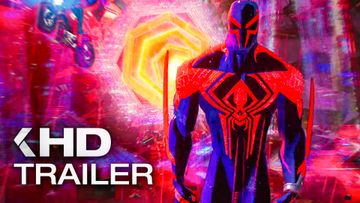
At the heart of the plot is the idea of so-called "canonical events" – key moments that must take place in every Spider-Man existence. Miles questions this concept and thus finds himself in opposition to powerful figures such as Spider-Man 2099. At the same time, the film deepens the relationship between Miles and Gwen Stacy and sheds light on their own inner conflicts.
Visually, "Across the Spider-Verse" goes one step further. Each universe has its own distinctive style. Gwen's world looks like an impressionist watercolor, while other dimensions are reminiscent of futuristic comics or alternative forms of animation. The film boldly switches between different techniques, creating a visual fireworks display that is second to none.
Narratively, the sequel is more complex and darker. While the first film was self-contained, "Across the Spider-Verse" ends with a cliffhanger that sets the stage for the third installment. Themes such as identity, self-determination, and breaking with predetermined expectations are more prominent. Miles is shown not only as a hero, but as an individual who wants to find his own way – even if it means breaking existing rules.
Why the Spider-Verse is so special
The two films released so far are characterized by a rare combination of heart, humor, and technical innovation. They respect the comic book template without being constrained by it, while at the same time opening up new perspectives on familiar characters. They also give space to a hero who has long been absent from major cinema productions. Miles Morales embodies a new generation of superheroes – diverse, approachable, and shaped by modern realities.
With their unique style, strong characters, and bold narrative choices, the "Spider-Verse" films have had a lasting impact on the genre. They show that superhero stories can still surprise us even after decades – if we are willing to break new ground.