First Clues About Scarlett Johansson's Role in The Batman 2
Johansson could become the central antagonist
New rumors about Scarlett Johansson in "The Batman 2"! As Hollywood insider Jeff Sneider reports on his blog, the former Marvel star could now take on a central role in the eagerly awaited sequel.
Johansson is set to take on the role of Gilda Gold, the wife of Harvey Dent aka Two-Face. In the comics, Gold turns out to be the serial killer Holiday, who specifically kills members of Gotham's criminal families on public holidays. If the rumor turns out to be true, Johansson would not only be part of the DC universe, but also a possible adversary for Batman. So far, however, this is merely unconfirmed information – an official statement from the studios is still pending.
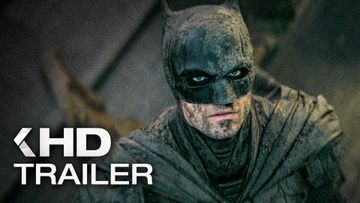
Filming on "The Batman 2" is set to begin in spring 2026, while the film is scheduled for release omn October 1, 2027. In addition to Robert Pattinson as Bruce Wayne, other cast returnees have also been confirmed for "The Batman 2". They include Colin Farrell as Penguin, Andy Serkis as Alfred Pennyworth and Jeffrey Wright as James Gordon.
Batman's most famous adversaries: Icons of the Dark Knight
Batman is not only one of the most famous superheroes in the world, but also the one with the most impressive rogues' gallery in comic book history. Since his first appearance in 1939, the Dark Knight has had to face a multitude of opponents who could hardly be more different. From psychopathic killers and corrupt men of power to tragic figures with a broken sense of morality – Batman's enemies shape his mythos just as much as he does himself. They mirror his fears, his doubts and his principles.
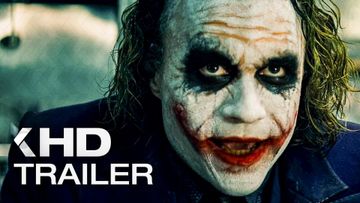
The Joker: Batman's eternal nemesis
The Joker is undoubtedly Batman's best-known adversary. He embodies pure chaos and challenges Batman's quest for order. While Batman lives by the rules and rejects lethal violence, the Joker exists beyond any morality. His crimes serve no purpose other than the destruction of social norms. The psychological level of their conflict is particularly dangerous: the Joker sees Batman as his antithesis and constantly tries to prove that even the Dark Knight is only one bad day away from the moral abyss.
Two-Face: the fall of an idealist
Harvey Dent was once a symbol of hope and justice in Gotham City. As a dedicated prosecutor, he fought together with Batman against organized crime. After an acid attack, however, he not only loses half of his face, but also his mental stability. As Two-Face, he decides over life and death with the toss of a coin. His character stands for the failure of the rule of law and illustrates how closely heroism and madness can be linked.
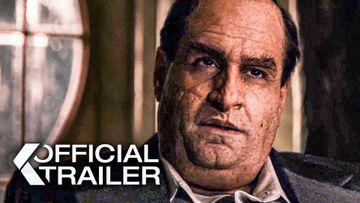
The penguin: the elegant side of crime
Oswald Cobblepot, better known as the Penguin, is not your typical supervillain. He relies less on violence than on influence, money and political connections. To the outside world, he appears as a sophisticated businessman, while in the background he pulls the strings of the underworld. The Penguin embodies the systemic corruption of Gotham and shows that true evil often comes in a suit.
The Riddler: intelligence as an obsession
Edward Nygma is obsessed with his own intelligence. As the Riddler, he commits crimes that are always riddled with puzzles and clues. He doesn't just want to win, he wants to be admired. His greatest weakness is his ego, as he cannot bear to operate in secret. The Riddler forces Batman to push his detective skills to the limit.
Catwoman: moral gray area
Selina Kyle aka Catwoman is one of the most complex characters in the Batman universe. She is a thief, survivalist and occasional adversary, but often also an ally. There is a special relationship between her and Batman, characterized by mutual respect and romantic tension. Catwoman challenges Batman's strict moral code and shows that reality is not always black or white.
Scarecrow: Lord of Fear
Dr. Jonathan Crane, known as Scarecrow, uses fear as a means of control. With his toxic gases, he causes extreme hallucinations in his victims. For Batman, who is himself a symbol of fear, Scarecrow poses a particularly perfidious threat. He forces the Dark Knight to confront his own traumas – especially the loss of his parents.
Bane: the physically superior opponent
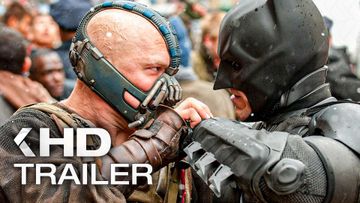
Bane is one of the few opponents who are not only mentally but also physically superior to Batman. With strategic skill and brute strength, he succeeded in plunging Gotham into chaos and defeating Batman once and for all. His legendary victory, in which he breaks Batman's back, made him one of the most dangerous characters in the entire DC universe.
Ra's al Ghul: the ideological extremist
Ra's al Ghul does not see himself as a villain, but as the savior of humanity. With his organization, the League of Shadows, he pursues the goal of ridding the world of its own corruption through radical measures. His centuries-old existence and his use of the Lazarus Pits give him almost immortal powers. For Batman, he is an opponent who challenges him not only physically, but above all morally.
Poison Ivy: nature versus humanity
Pamela Isley, better known as Poison Ivy, fights fanatically for the protection of nature. Her love of plants goes so far that she considers human life to be of secondary importance. With her botanical skills and manipulative charisma, she is one of Batman's most dangerous opponents. Her motives are understandable, but her methods are extreme.
Harley Quinn: from sidekick to icon
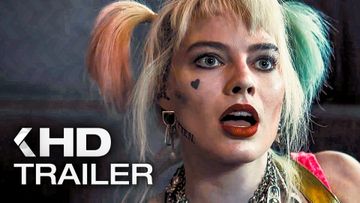
Harley Quinn started out as the Joker's sidekick, but developed into one of the most popular characters in the Batman universe. Behind her eccentric façade lies a tragic story of emotional abuse and the search for identity. Today, she is far more than just an antagonist to Batman – she is an anti-heroine in her own right.
Other well-known adversaries
In addition to these characters, there are numerous other antagonists who shape Batman's world: Mr. Freeze, who becomes a criminal out of love for his terminally ill wife; Killer Croc, a tragic figure between man and monster; Clayface, whose identity is literally malleable; or Hush, who deliberately uses Batman's past against him.
Conclusion
Batman's antagonists are so fascinating because they are more than simple villains. They represent fear, power, madness, ideology and moral gray areas. Each of them presents Batman with a different challenge – physically, mentally or emotionally. Without these iconic enemies, the Dark Knight would only be a masked fighter. With them, however, he becomes a legend.