Lee Cronin Reveals Connection Between The Mummy and Evil Dead!
It's about a very specific character
"Lee Cronin's The Mummy", a reimagining of the horror icon, is currently playing in theaters. But instead of simply telling a classic monster story, director Lee Cronin seems to have something much bigger in mind: In an interview with Collider, he revealed that his film is set in the same universe as "Evil Dead"!
According to Cronin, "The Mummy" features an archaeology professor whose last name hints at a distant connection to the characters from "Evil Dead Rise". But beyond that, there are also some stylistic similarities to Sam Raimi's horror series, such as the exaggerated depiction of violence.
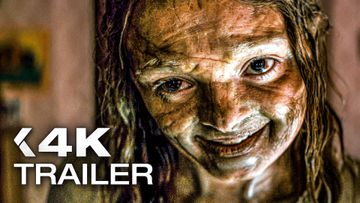
"Lee Cronin's: The Mummy" tells the story of young Katie, who one day vanishes without a trace in the desert. When she miraculously returns to her family nearly ten years later, it quickly becomes clear that something is wrong with Katie. Something sinister has awakened within the girl, and the reunion turns into a true nightmare.
Although reviews were rather mixed, the film grossed nearly $35 million on its opening weekend. The "Evil Dead" universe is also set to expand further: This year, "Evil Dead: Burn" – now the sixth film in the series – will be released. Next year, "Evil Dead: Wrath" will follow.
Horror from the Desert: Why the Mummy Is an Icon of Horror
In the history of classic movie monsters, the mummy holds a special place. While the vampire captivates with his seductive elegance and the werewolf embodies humanity's primal, animalistic nature, the mummy represents something far more abstract and, at the same time, far more terrifying: the unstoppable return of the past and the violation of the dead's rest. Since the dawn of sound film, the mummy has established itself as one of the most enduring icons of the horror genre, whose fascination remains unbroken to this day.
The Fear of Grave Desecration
The origin of the fascination with mummies lies in the Egyptomania of the early 20th century. The discovery of Tutankhamun's tomb in 1922 and the legends surrounding the subsequent "Curse of the Pharaohs" provided the perfect breeding ground for cinema. The mummy is the only monster that derives its raison d'être from humanity's transgression of boundaries. It is not simply "there", but is awakened. In this way, the genre taps into our deep-seated fear of the consequences of human curiosity and arrogance. Those who disturb the dead to recover knowledge or treasures summon a force that cannot be defeated by logic.
Style-Defining Classics and the Evolution of Horror
The cinematic birth of the icon took place in 1932 with Boris Karloff in "The Mummy". Unlike later incarnations, Karloff's Imhotep was a tragic, almost melancholic being. He was no mindless thug, but a powerful magician who overcame death for love. This film established the motif of "eternal love" seeking reincarnation across millennia – a theme later revisited in Francis Ford Coppola's "Dracula" or, indeed, in modern Mummy adaptations.
In the 1940s, the image was transformed by Hammer Studios. In "The Mummys" (1959), Christopher Lee shaped the image we often parody today: the unstoppable, linen-wrapped figure that slowly but steadily shuffles toward its victims. This is where the true horror of the mummy lies. It is not fast, but it is relentless. You can run away from it, but you cannot escape it, for it has time itself on its side.
The Modern Era: Action, Horror, and the "Shared Universe"
The monster experienced a massive surge in popularity in 1999 with Stephen Sommers' "The Mummy". Here, the horror element was mixed with Indiana Jones-style adventure. Arnold Vosloo's Imhotep was a CGI-enhanced force of nature that brought plagues upon Egypt. This film demonstrated that the mummy also works in modern blockbuster cinema by combining the supernatural with historical bombast.
Today, we are witnessing another transformation. When directors like Lee Cronin place the mummy in a shared universe with the demons from "Evil Dead", the circle is complete. The mummy returns to what it has always been at its core: a malevolent, incomprehensible being from another time. The fusion of ancient mythology and modern "splatter" horror demonstrates just how adaptable the character is.
Why it endures
The Mummy is so iconic because it reflects our mortality. It is a body that has defied natural decay. Hidden within its dusty bandages is the reminder that the past is never truly dead – it is merely waiting to be unearthed. Whether as a romantic lover, a silent avenger, or a grotesque monster in a shared universe: The Mummy will continue to haunt us as long as we dare to stir up the sands of time.