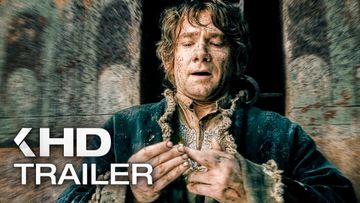
Peter Jackson Announces Tintin Sequel
There is no start date yet
For more than a decade, fans waited in vain for a sequel to "The Adventures of Tintin". The adventures of the famous reporter and his faithful dog seemed to have faded into obscurity long ago – but now, of all people, Peter Jackson has delivered a real surprise. At the Cannes Film Festival, the director revealed that he is indeed working on a screenplay for the second installment and also plans to direct it.
Jackson explained that he is very excited about returning to the world of Tintin. At the same time, he admitted that the long delay was frustrating. According to his own statements, he had already agreed with Spielberg years ago to make the second film.
The first film, "The Adventures of Tintin", hit theaters back in 2011. Directed by Steven Spielberg, it was a modern reinterpretation of Hergé's famous comics. Fans particularly loved the mix of adventure, humor, and the animation, which was innovative at the time. It is not yet known when the sequel will hit the big screen or whether the cast from the first film will return.
From Middle-earth to King Kong: The Cinematic Legacy of Peter Jackson
Today, Peter Jackson is a name inextricably linked to epic cinema and groundbreaking visual effects. But the New Zealander's path to the top of Hollywood was anything but conventional. From his beginnings as an independent filmmaker with a penchant for the grotesque to the creation of one of the most successful film franchises of all time, Jackson has fundamentally changed the way stories are told on the big screen.
The Beginnings: Splatter, Gore, and Black Humor
Before Peter Jackson became the "Lord of the Rings", he was known in cinephile circles primarily for his handmade, often bloody horror comedies. With films like "Bad Taste" (1987) and "Braindead" (1992), he set new standards in the "splatter" genre. These early works were characterized by anarchic humor and impressive creativity in the practical effects, which Jackson often crafted himself in his parents' garage.
Even back then, his talent for visual storytelling was evident, but it wasn't until "Heavenly Creatures" (1994) that he proved he could also direct profound, psychological dramas. The film, based on a real-life criminal case in New Zealand, earned him his first Oscar nomination and marked his transition from cult director to a filmmaker to be taken seriously.
Daring to Do the Impossible: The Lord of the Rings Trilogy
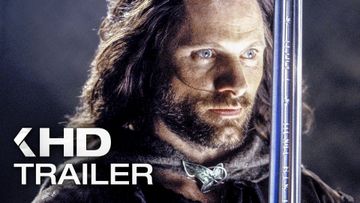
In the late 1990s, Jackson took on a project that many considered "unfilmable": J.R.R. Tolkien's "The Lord of the Rings." Jackson convinced New Line Cinema to shoot all three films simultaneously in his native New Zealand – a logistical and financial gamble without parallel.
The trilogy – "The Fellowship of the Ring", "The Two Towers", and "The Return of the King" – became a global phenomenon. Jackson succeeded in combining Tolkien's complex mythology with emotional depth and monumental battles. In particular, the introduction of Gollum, portrayed by Andy Serkis using motion-capture technology, revolutionized digital character performance. The crowning achievement came in 2004, when The Return of the King won all eleven Oscars for which it was nominated, including "Best Picture" and "Best Director".

The Era of Special Effects: King Kong and Wētā Workshop
Following his success in Middle-earth, Jackson fulfilled a childhood dream: the remake of "King Kong" (2005). Here, he was able to combine his passion for classic cinema with state-of-the-art technology. The film impressively demonstrated the power of Jackson's effects studio, Wētā FX. The attention to detail with which the giant gorilla and the ecosystem of Skull Island were brought to life set new standards in the industry.
Despite mixed reviews for later projects like "The Lovely Bones" (2009), Jackson's influence on technology remained undiminished. He championed the development of high-frame-rate filming (48 frames per second) and played a pivotal role in driving the evolution of digital cinematography.
Return to Middle-earth: The Hobbit Trilogy
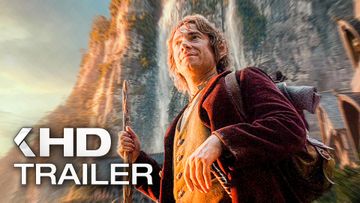
Expectations were sky-high when, years later, Jackson once again took the director's chair for the prequel to Frodo Baggins' story. Originally planned as a two-parter, "The Hobbit" was ultimately expanded into a trilogy as well.
Although the films were commercially successful, many fans criticized the excessive use of CGI compared to the physical sets of the original trilogy. Nevertheless, The Hobbit cemented Jackson's status as the ultimate architect of Tolkien's world and gave a lasting boost to tourism in New Zealand. Through his vision, "The Shire" became a real place in the collective imagination.
New Directions: Documentaries and Restoration
In recent years, Jackson has moved away from major blockbuster productions and put his technical expertise to work in the service of history. With "They Shall Not Grow Old" (2018), he created a documentary about World War I in which he restored, colorized, and added sound effects to historical archival footage, making the soldiers appear more lifelike than ever before.
The music project "The Beatles: Get Back" (2021) also showcased his mastery in handling massive amounts of data and state-of-the-art AI restoration technology. He gave viewers the feeling of sitting right in the studio with the Fab Four.
Conclusion: A visionary with his feet on the ground
Peter Jackson has never allowed himself to be pigeonholed throughout his career. He has remained the eternal fan who approaches his projects with the enthusiasm of a child, yet possesses the discipline of a technical genius. His films have put New Zealand on the global cinematic map and have repeatedly pushed the boundaries of what is technically possible. Whether through handmade horror or digital armies – Jackson remains a storyteller who loves spectacle without ever forgetting the human core of his characters.