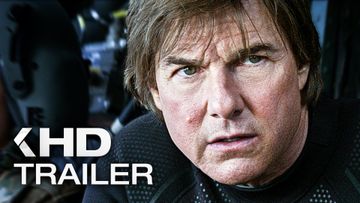
30 years of Mission Impossible: Why the Tom Cruise action film series is so unique
To mark the anniversary, we're taking a look back
Time flies: It's been 30 years since the first "Mission: Impossible" hit theaters. Despite the star power of lead actor Tom Cruise, hardly anyone would have expected it to be the start of such a success story. The 1996 film was followed by seven more installments featuring Cruise as secret agent Ethan Hunt. But that's not all: the action film series has, in a sense, become the flagship of Cruise's career. To mark the 30th anniversary, we're taking a look back and revealing what makes the "Mission: Impossible" blockbusters so unique.
Basically, it's thanks to Tom Cruise that the films exist at all. "Mission: Impossible" is based on the TV series of the same name from the 1960s. As a fan of the series, it was Cruise's idea to turn it into a movie. He brought "Scarface" director Brian De Palma on board to helm the project. In less capable hands, the material might have become just another run-of-the-mill action thriller. The choice of De Palma, however, proved to be a stroke of luck. Although the film is primarily tailored to Cruise, the first "Mission: Impossible" film clearly bears the director's signature; he stands in the tradition of suspense master Alfred Hitchcock and, accordingly, has a special knack for effectively creating moments of tension.
Thus, his "Mission: Impossible" adaptation captivates primarily through its elaborate staging, which conjured an unforgettable cinematic moment from a single scene: When Ethan Hunt rappels down from the ceiling while breaking into CIA headquarters, loses control, and barely manages to hover just above the ground.
Legendary Moments
This incredibly thrilling sequence is not only a highlight of the film – it has also become a sort of trademark for the entire series. Thus, all subsequent "Mission: Impossible" installments that followed over the years are characterized by at least one scene that stands out as a larger-than-life moment. Sometimes we saw a spectacular motorcycle duel (in Part 2), sometimes Ethan Hunt jumps off a skyscraper into the abyss (Part 3), and in Part 4 he takes it up a notch as he shimmies along the facade of the Burj Khalifa, the world's tallest building. In Parts 5 through 8, Ethan Hunt clung to the exterior of a takeoff-bound transport plane, executed a dramatic parachute jump, raced down a cliff on a motorcycle, and engaged in a dogfight above the clouds on a biplane.
Daring Action Star
What makes it special: The action is all real – and we actually see Tom Cruise instead of a stunt double. The "Mission: Impossible" films have made him one of the biggest action stars in the industry. Hardly any other star of his caliber has dedicated himself so wholeheartedly to the principle of "higher, faster, further" as Cruise has. It makes a huge difference when you can clearly see on screen that he's performing the breakneck stunts himself – it makes the illusion perfect and makes even a larger-than-life hero like Ethan Hunt seem authentic.
Particularly noteworthy is a scene from the eighth installment, "Mission: Impossible – The Final Reckoning," which was released last year and is reportedly intended to serve as the finale of the long-running film series. When Cruise finds himself at a dizzying height on the double-decker plane, battling his opponent, he doesn't just cut a fine figure in terms of action. No, he also delivers a compelling performance, revealing nuances that are impressive given the centrifugal forces acting on him at that moment.
Check it out in the clip below, but be warned: If you don't want any spoilers, you should watch the movie first.
Brian De Palma was just the beginning
In addition to the daring action sequences and Cruise's performance, the "Mission: Impossible" series stands out not least for its choice of directors. Brian De Palma was just the beginning. For the second installment, the series enlisted John Woo, a giant of action cinema. Woo put his own unique stamp on the sequel, at times making the film feel like a spectacularly choreographed action ballet. His vision for "Mission: Impossible" differed significantly from that of his predecessor, De Palma. The change in the director's chair became another hallmark of "Mission: Impossible" – and contributed to the series' appeal in the subsequent installments. Brian De Palma and John Woo were followed first by J. J. Abrams, then Brad Bird, and finally Christopher McQuarrie. The different styles of the respective directors ensured that the franchise remained refreshingly diverse. It wasn't until the fifth installment that the director was retained: Christopher McQuarrie was also set to direct the subsequent installments. As a result, regardless of the filmmaker's qualities, a significant part of the films' appeal was lost.
Will a new director take the helm one day? "The Final Reckoning" is considered the last installment. But who knows: we wouldn't be surprised if "Mission: Impossible" were to be revived. But that's all in the future. Here and now, we congratulate: Happy 30th, Mr. Hunt!